
Mahale Mountains National Park
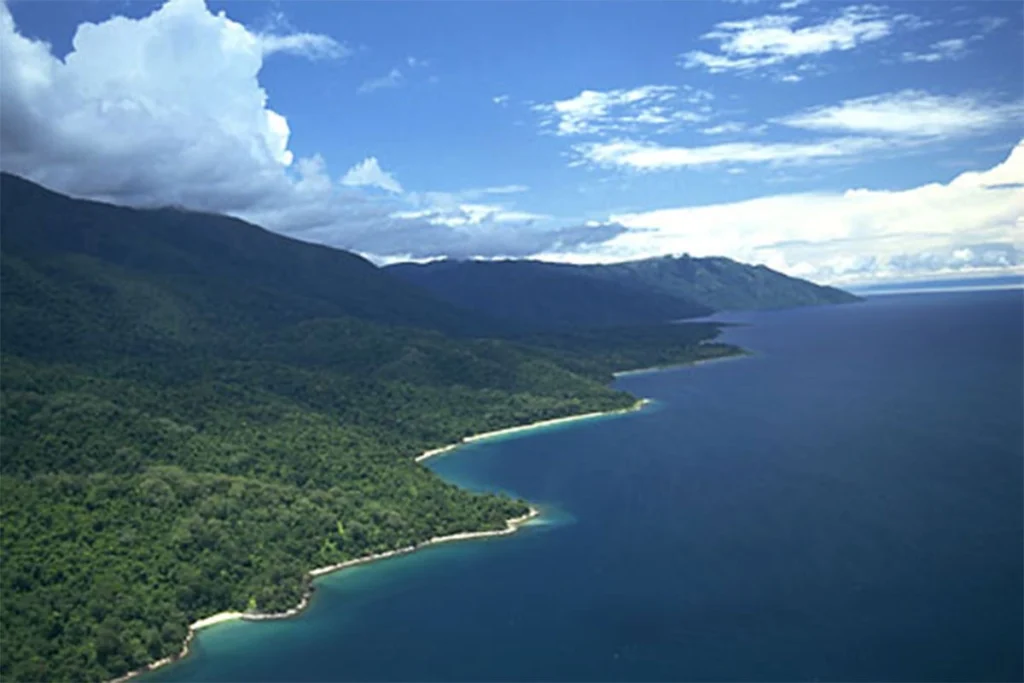
Mahale Mountains National Park, situated in the far west of the country along the shores of Lake Tanganyika and renowned for premier chimpanzee trekking in Africa, is one of the most distinctive safari sites on the continent. The lakeshore features a beach of fine, powdery white sand, backed by a range of formidable mountains adorned with lush tropical vegetation. The woodland resonates with song as large blue butterflies flutter above the streams.
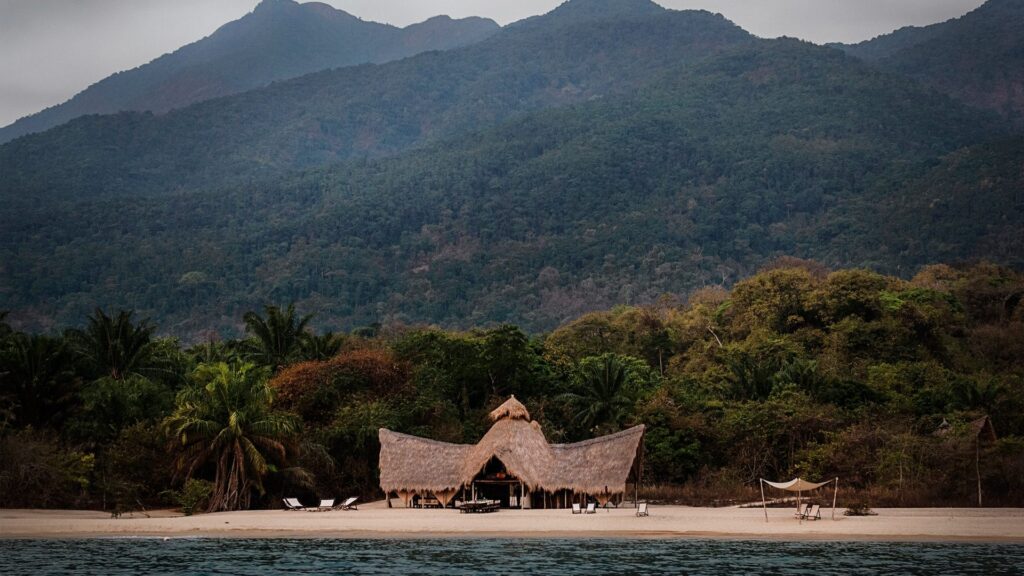
Established to safeguard the numerous chimpanzees residing in the area, Mahale Mountains National Park is celebrated for its stunning sunsets over Lake Tanganyika, one of the oldest and deepest lakes globally, rendering it a vital destination for those undertaking a photographic safari in Tanzania. The park is abundant with life, with numerous rivers and waterfalls, while the lake’s shoreline boasts pristine white sandy beaches.
The park features a stunning array of ecosystems, including grasslands, rainforests, alpine bamboo, and woodlands, where over 50 animal species have been recorded, with several monkey and ape groups being the most prominent. More than 90 distinct species of fish inhabit the clean waters of the lake.
Chimpanzees in Mahale Mountains National Park Tanzania
Approximately 1,600 km² of the Mahale Mountains serves as the habitat for around 1,000 chimpanzees within this national park. Since 1965, researchers have closely observed the Mimikire clan of Mahale chimpanzees. The M-group, as it is generally referred as, comprises approximately 60 chimpanzees. They navigate freely and at their discretion, yet exhibit a calm demeanor in the presence of others, allowing for close tracking and observation. To safeguard the health of the chimpanzees, all human guests on chimpanzee safaris must use surgical masks, which will be supplied.
The trek to encounter the Mahale chimpanzees can range from an easy 20-minute stroll to a demanding journey that may extend for most of the day. They are most visible towards the conclusion of the dry season (August to October), as the woodland trails are driest and least treacherous, and the chimpanzees are typically nearest to the coast. It is advisable to wear walking boots, long trousers, and carry a small bag for cameras and binoculars when observing chimpanzees.
While we cannot provide an absolute assurance, it is highly probable to observe chimpanzees in the Mahale Mountains. It would be highly improbable to remain here for several days without encountering them. Frequently, you will have the opportunity to observe them grooming, engaging in playful scuffles, foraging, disputing, and nurturing their offspring. Observing chimps engage in their everyday activities while seated in the forest is an indelible experience, which renders the chimp safaris in Mahale extraordinary.
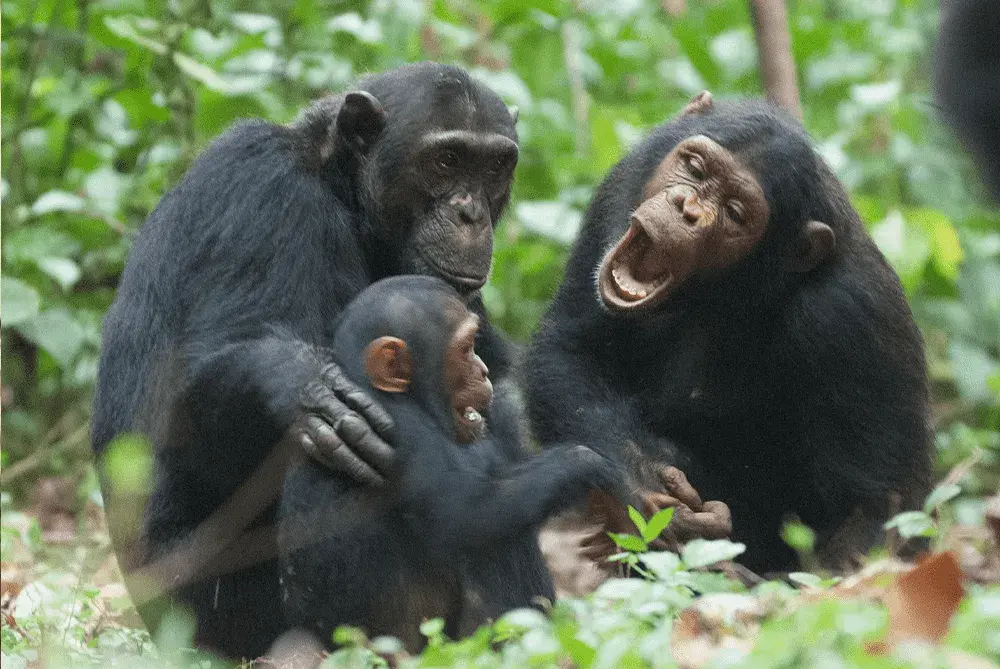
Chimpanzees are the primary draw, however numerous other smaller ape species are also present; avian observation is excellent, and hippopotamuses and crocodiles are frequently nearby. Leopards frequently visit, but a genuine sighting is a rare privilege.
The minimum age for participation in chimpanzee trekking, as established by TANAPA, is 12 years, making it a suitable safari choice for families with older children and teenagers.
Activities to do in Mahale Mountains National Park
Chimpanzee trekking is the primary allure of Mahale; yet, it has a plethora of additional offerings. It is an exceptionally beautiful and secluded place, frequently likened to paradise. Merely being present and ambling along the shores of Tanganyika is magnificent. Engage in snorkeling, canoeing, or fishing on the lake, traverse the forest for sightings of smaller monkeys and numerous avian species, or navigate narrow paths to uncover concealed waterfalls.
Accessing Mahale Mountains National Park
Accessing the park is an expedition, as it is reachable just by air and watercraft. The seclusion of the Mahale Mountains has preserved its pristine condition; it requires four to five hours of travel by small plane from Dar or Arusha to arrive here. Consequently, Mahale attracts only a few hundred people annually. Its unique position renders it expensive to visit; yet, it is distinctly unlike any other destination in Tanzania and possesses an enchanting quality. The park lacks highways, featuring only woodland trails amidst the verdant flora. If isolated safari destinations interest you, please refer to our Nyerere National Park Guide and our Ruaha National Park Guide!
The most economical method to get Mahale is by utilizing the biweekly scheduled flights that connect this park with Arusha. This park operates just on Mondays and Thursdays, and its relatively high cost renders it one of Tanzania’s most expensive yet worthwhile locations.
Best time to Visit Mahale Mountains National Park
The season influences the challenge of monkey trekking:
- June to early July: Precipitation occurs, chimpanzees ascend to elevated locations, resulting in more challenging hiking conditions.
- July to October: Arid conditions anticipated, facilitating more manageable chimping as they descend the inclines.
- November to March: precipitation, elevated temperatures, and humidity — chimpanzees ascend to greater altitudes as the season advances. They descend again in January/February.
- April to May: closed
The optimal period to visit Mahale is during the dry season, which extends from July to late October. Chimpanzees may also be observed during other times of the year, albeit with increased walking required. During the arid season, it is certainly advantageous to combine Mahale with Katavi National Park. The allure of visiting Western Tanzania lies in its seclusion, making such an isolated African safari rare elsewhere on the continent. In contrast to Nyerere NP, Ngorongoro Crater, or the Serengeti, access to Mahale is less frequent, as flights from Arusha to Mahale operate just twice weekly.
Accommodations in Mahale Mountains National Park
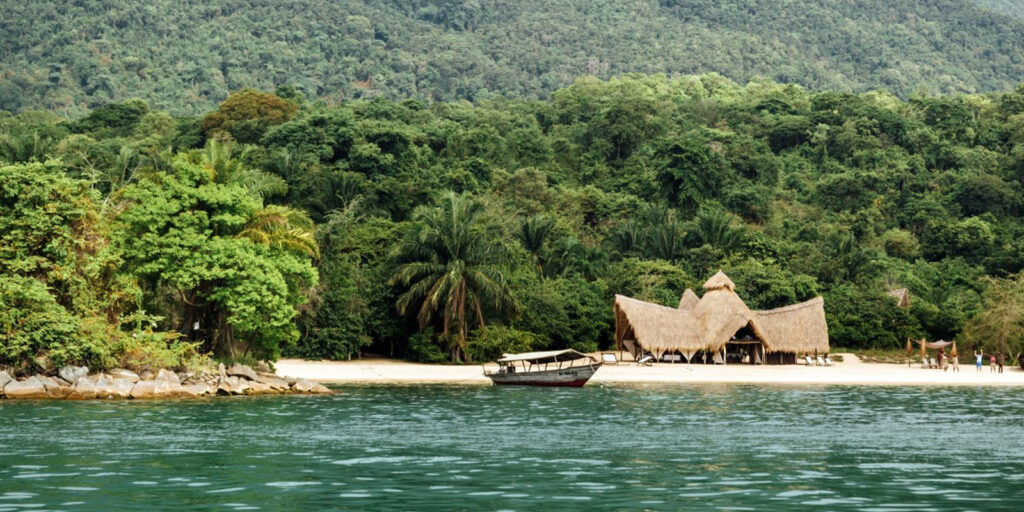
Given the investment of time and resources required to reach Mahale, it is advisable to opt for the premier accommodation available. Nomad’s Greystoke Mahale is renowned globally for both its setting and the “barefoot luxury” it provides. The alternative, marginally less expensive option is Mbali Mbali Mahale, located slightly further along the shore.
Contact us if you have any inquiries on our exceptional Mahale chimp trekking safaris! What is the delay? Commence the planning of your forthcoming significant expedition!